Human-centered systems
The biggest healthcare challenges are rarely technology problems alone.
Most healthcare failures do not happen because a system lacks features or sophistication. They happen because technology, workflows, information, incentives, and human behavior fail to align.
Healthcare organizations are increasingly navigating AI adoption, digital transformation, workforce challenges, operational complexity, compliance requirements, and growing demands for efficiency. Yet many initiatives struggle not because the technology is incapable, but because the human systems surrounding it were never designed to support success.
My background spans healthcare, technology, user experience, behavioral health, systems design, operations, and business leadership. That combination has led me to focus on a simple question: how do we build systems that people can understand, trust, and use effectively in the real world?
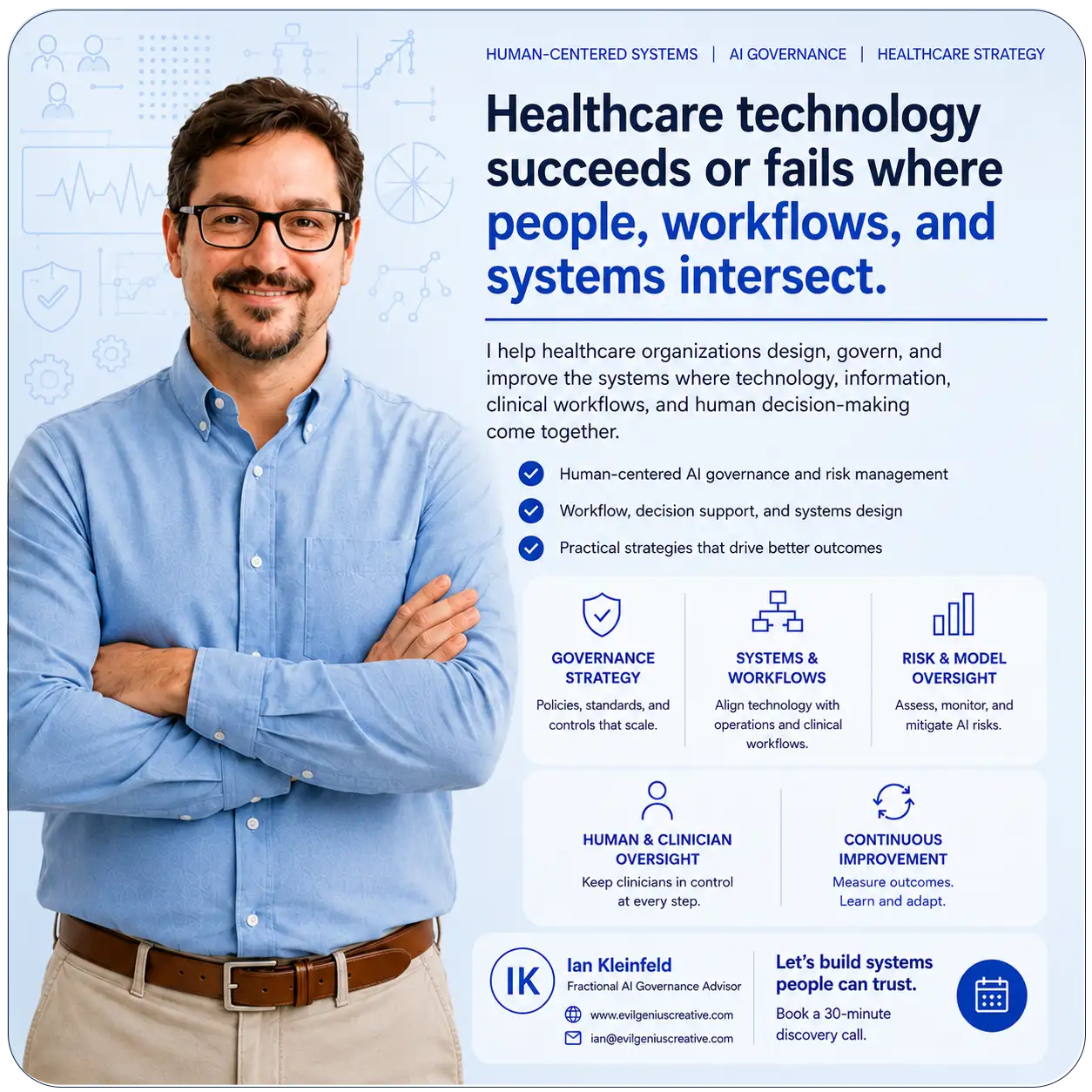
Whether evaluating AI governance, redesigning workflows, improving decision support, or helping organizations navigate change, I work at the intersection of people, technology, and organizational systems.
The goal is not simply better technology. The goal is better outcomes through systems that fit the realities of how people actually work.